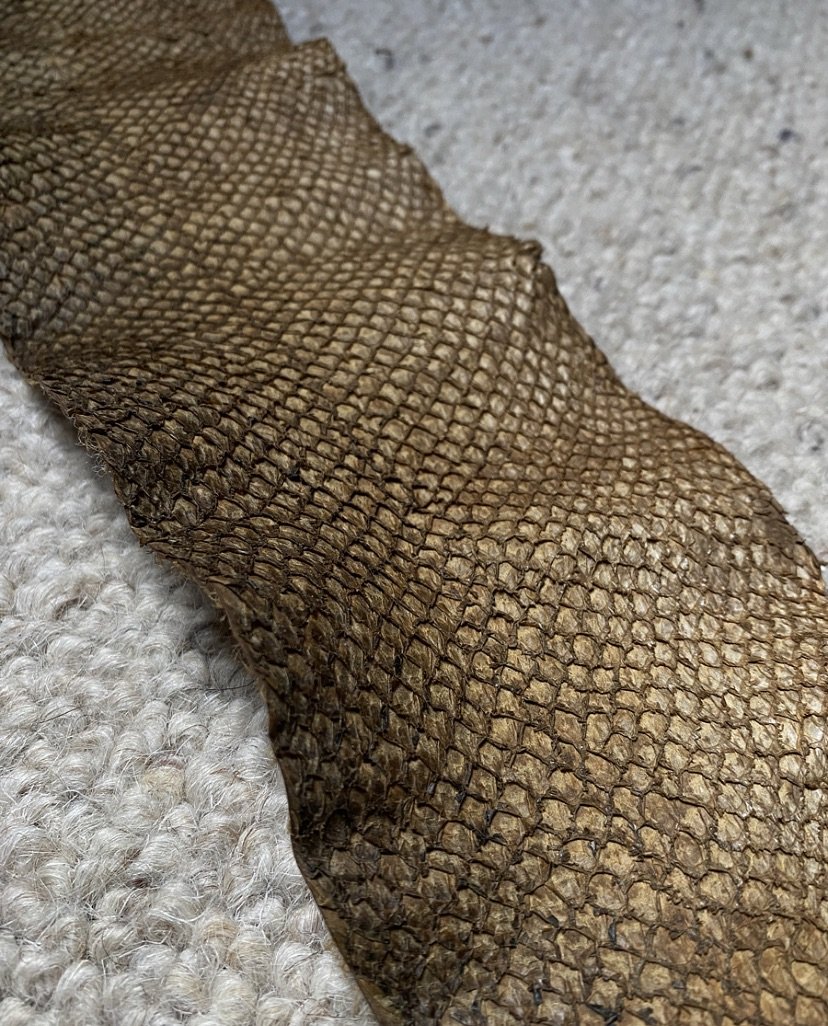
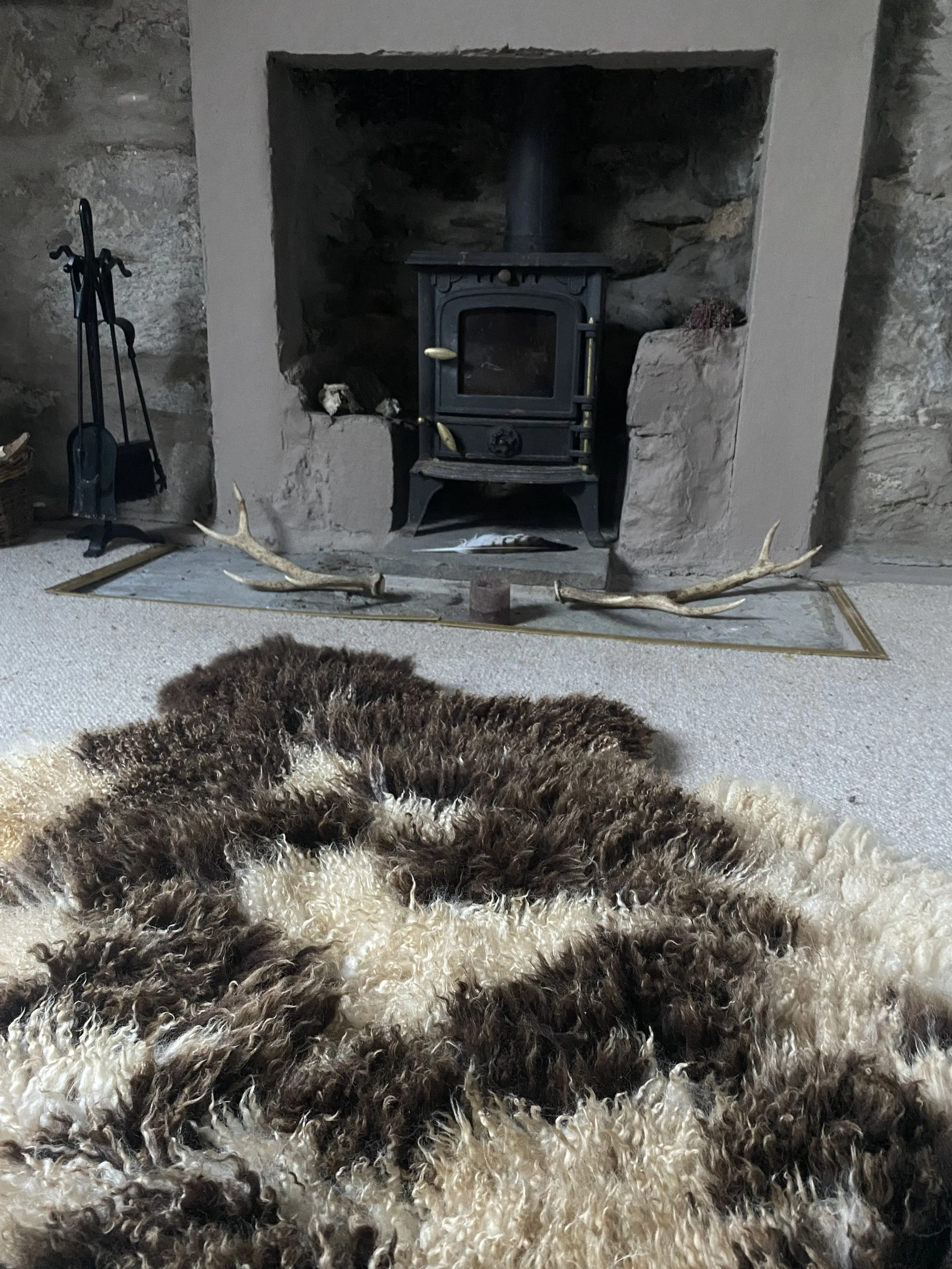
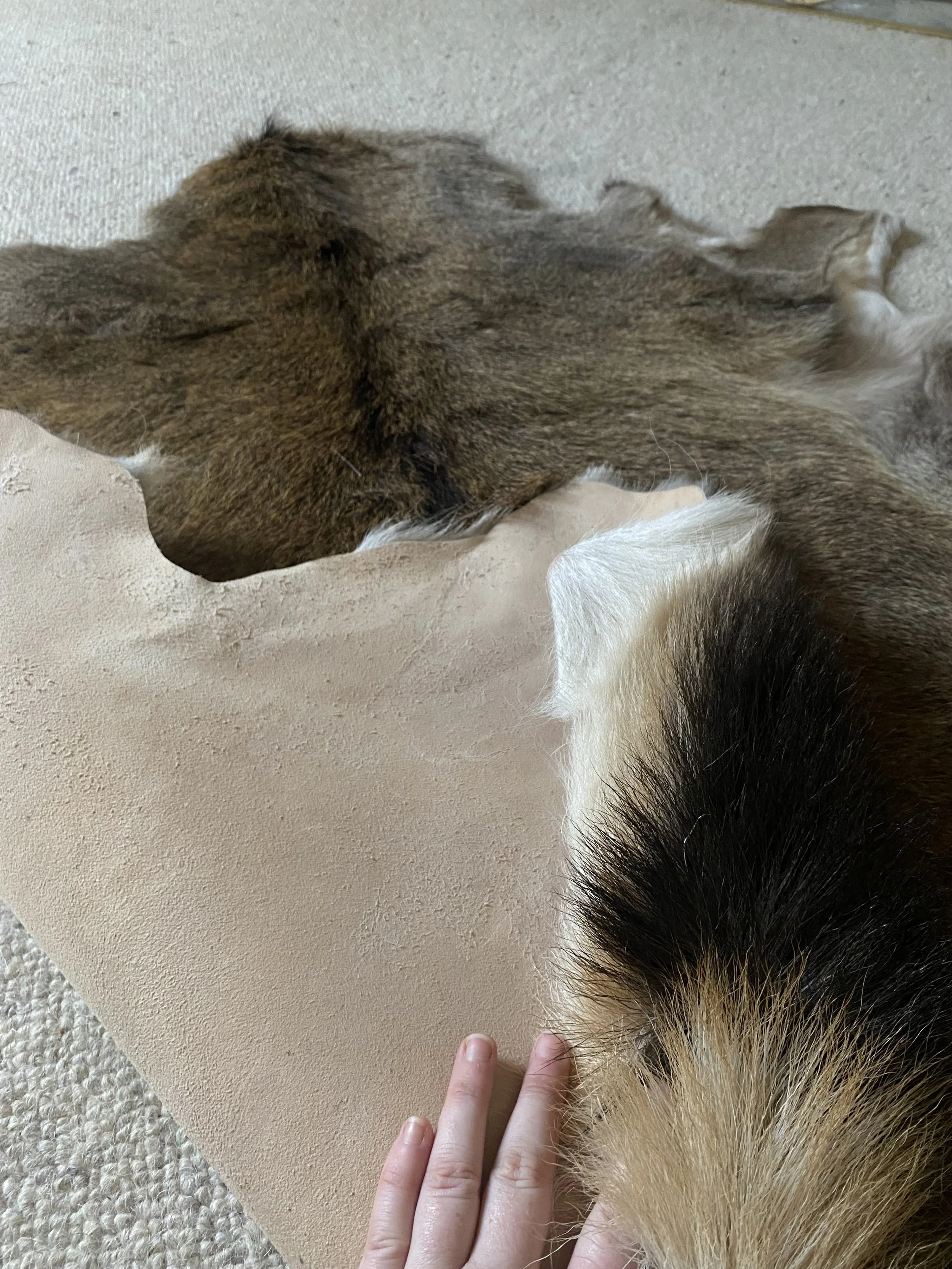
Myself and my partner run a small traditional tannery on the edge of the Cairngorms National Park, one of Scotland’s last Tanneries to produce traditional rawhide and bark tanned leather. We transform animal hides into functional leather items that will last a lifetime and beyond - hides which, as a by-product of the meat industry, would usually be left to go to waste and end up in landfill. It is our deepest devotion to tend to these hides with reverence and respect.

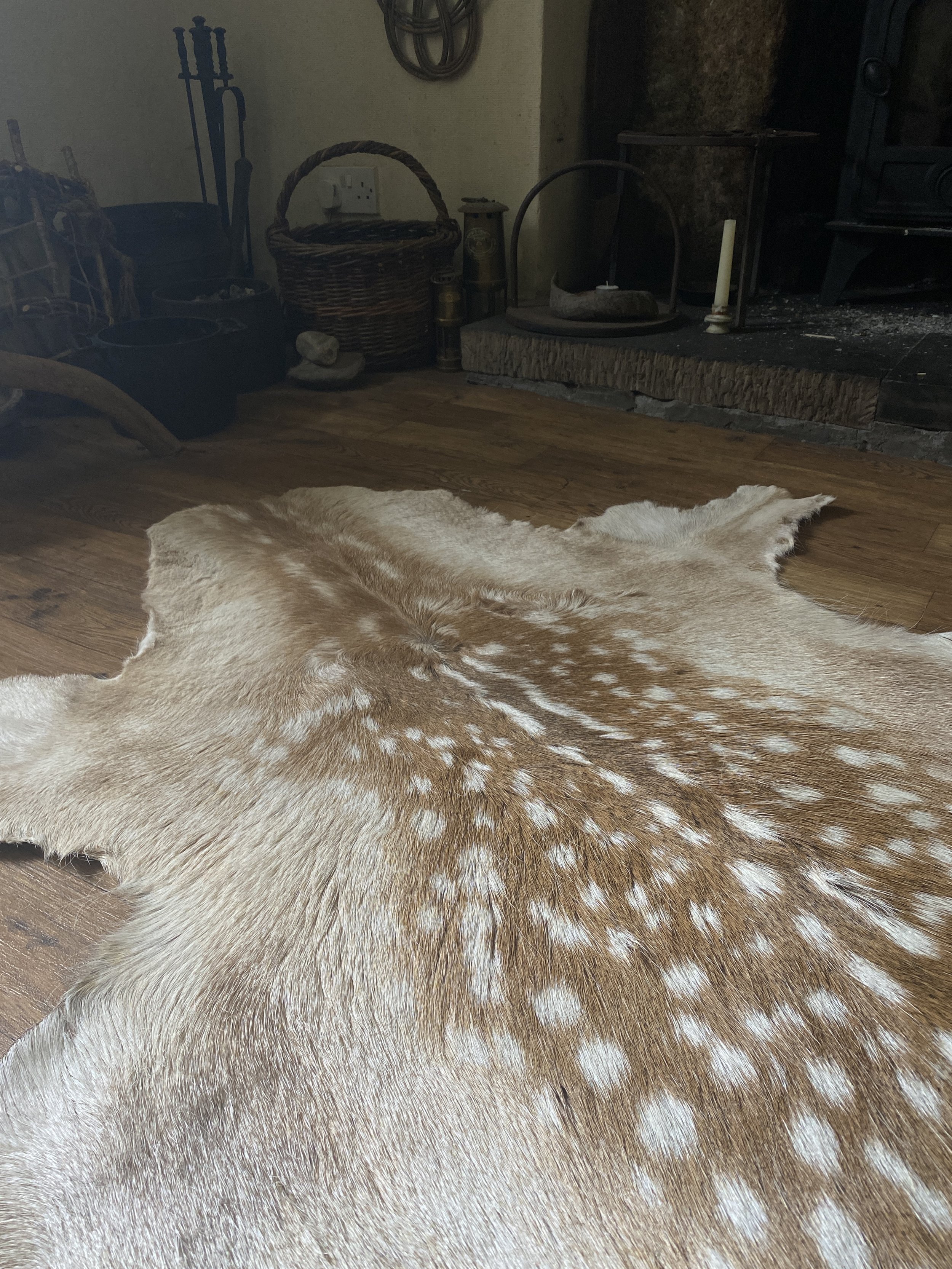
You can sometimes find our sheepskins and smaller tanned furs (such as foxes and rabbits) in the shop here, but if you’d like to see our full range of items then please visit www.woodlandtannery.com, or feel free to send an email to woodlandtannery@gmail.com with any enquiries.

Deerskin Paintings
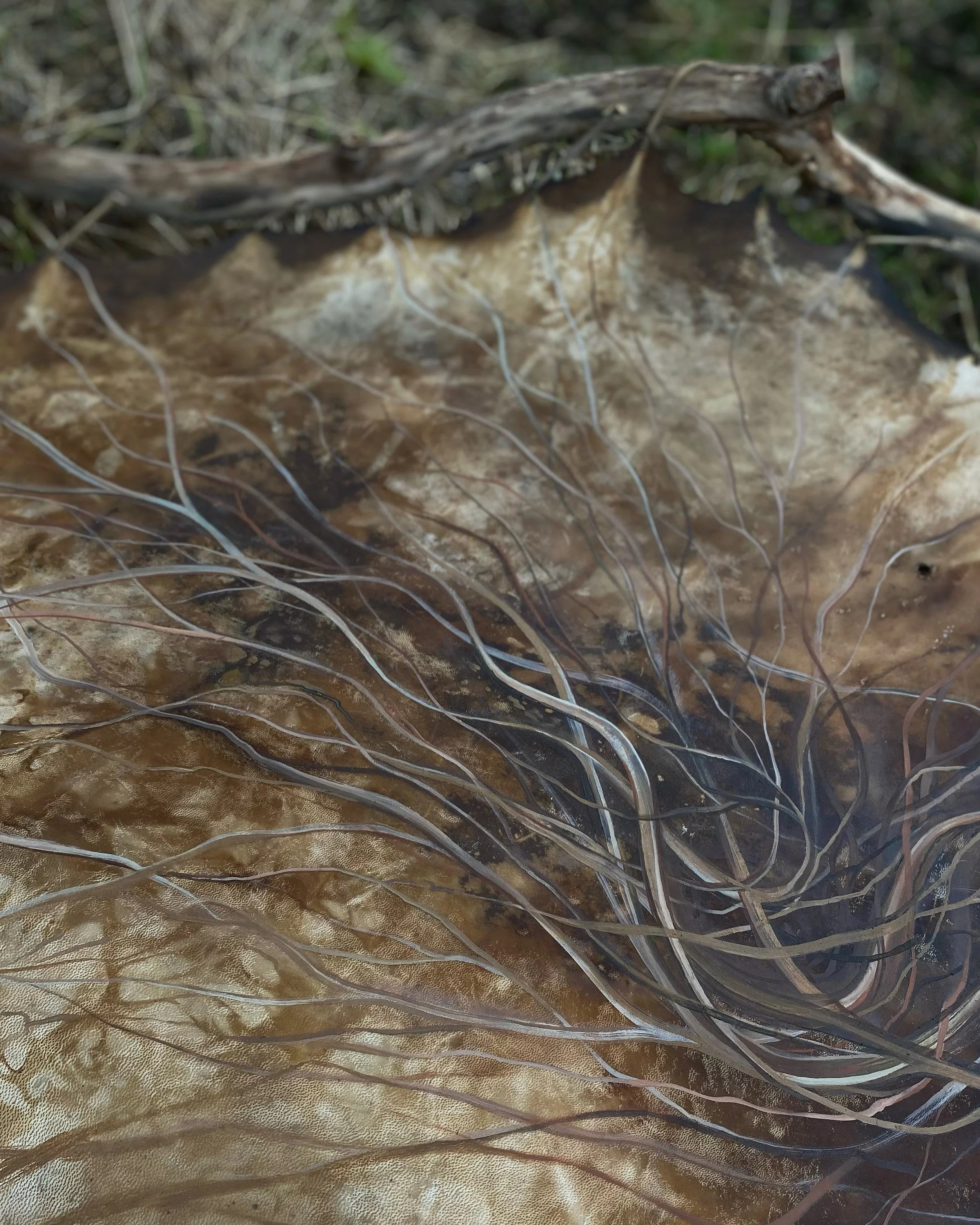
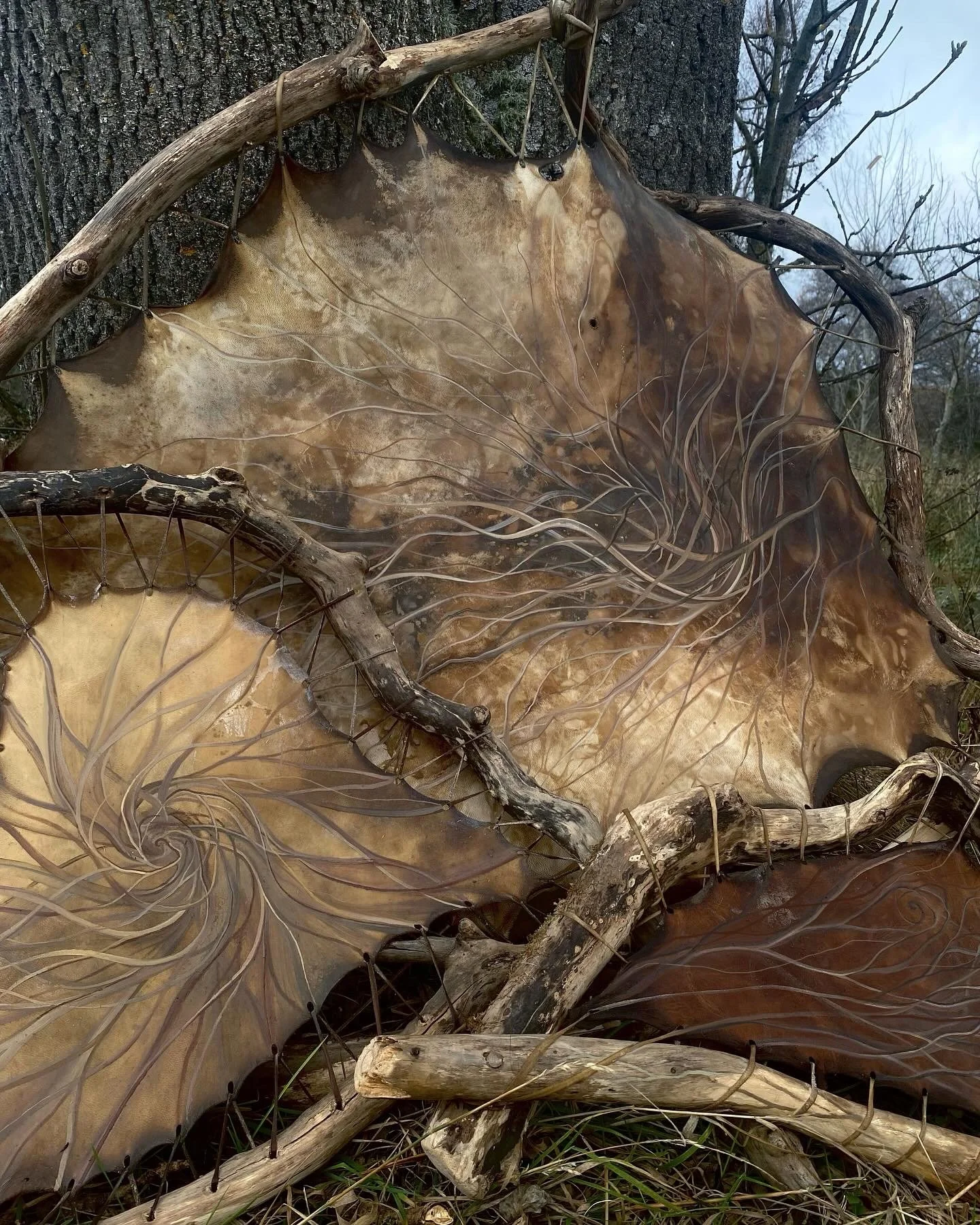
Some of my paintings extend onto animal hide as canvas, and in these works, I continue to explore the threads that bind material, process, and place.
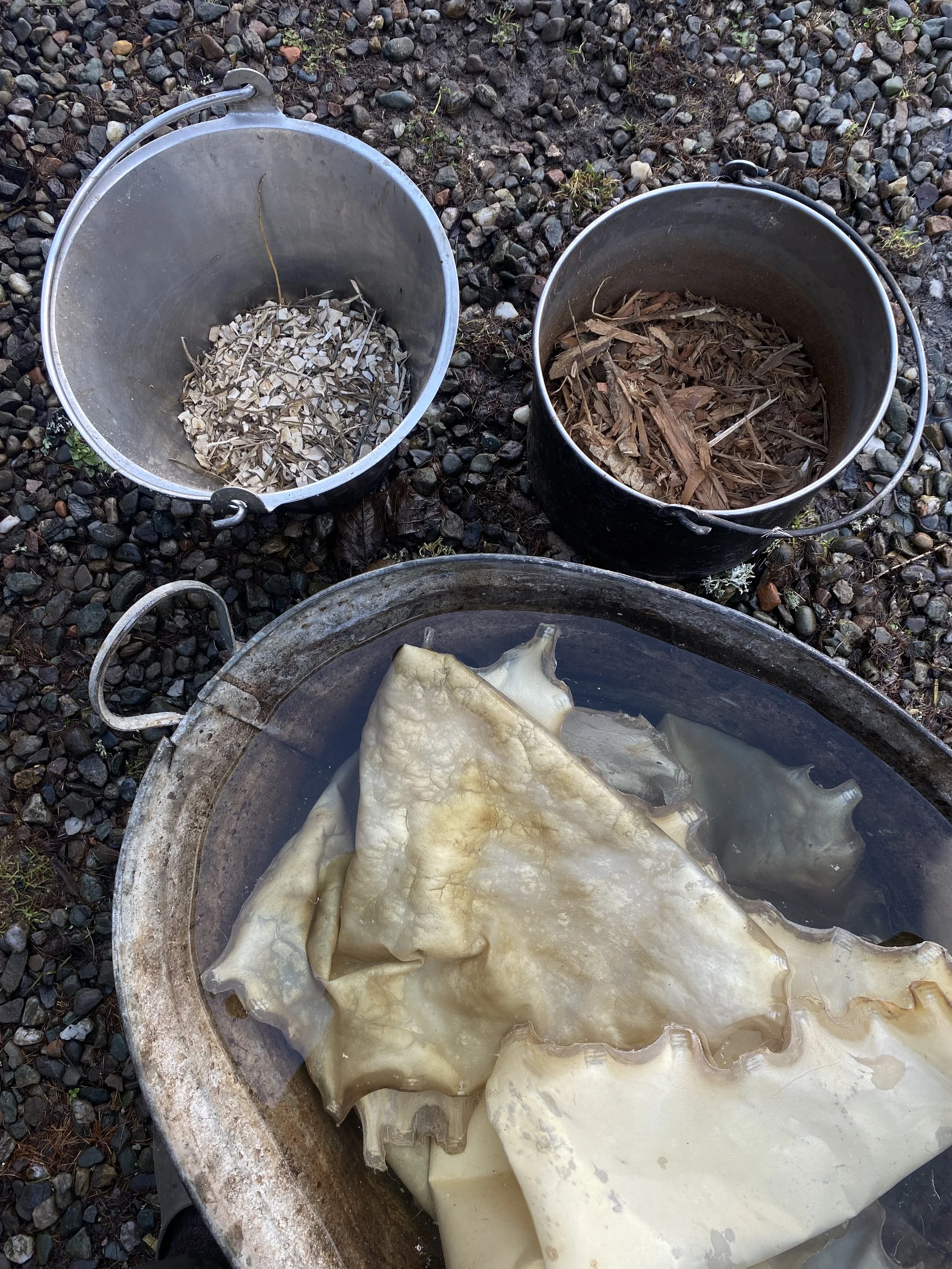
I work with tree barks and gathered plants to dye the hide, a process which reveals the subtle topography of the surface — folds, creases, and tensions held within the skin — through quiet variations of colour. These markings become a map to follow, guiding the movement of the brush as I work into and alongside them with wild pigments. In this way, the painted lines begin to trace and respond to patterns already present, echoing the branching and flowing structures found throughout the living world.


There is an inherent unpredictability in this stage of the process. The dyes move in their own way, shaped by variables beyond my control, allowing the work to be guided by natural forces rather than predetermined intention. I enter into collaboration with these materials, following their lead as the image begins to emerge.
The gathering of plants and bark is an essential part of this practice — not only as a source of material, but as a way of remaining in relationship with the land. Nature becomes simultaneously inspiration, medium, and process, each aspect woven into the next.
In the same way, the processing of the animal and the preparation of the rawhide becomes an integral part of the creative journey - working closely and intimately with themes of death and rebirth, and inviting a practice rooted in gratitude, reverence, and reciprocity. Through this, the work becomes an expression of continuity — an acknowledgment of the interwoven cycles that shape all life, and of our place within them.